
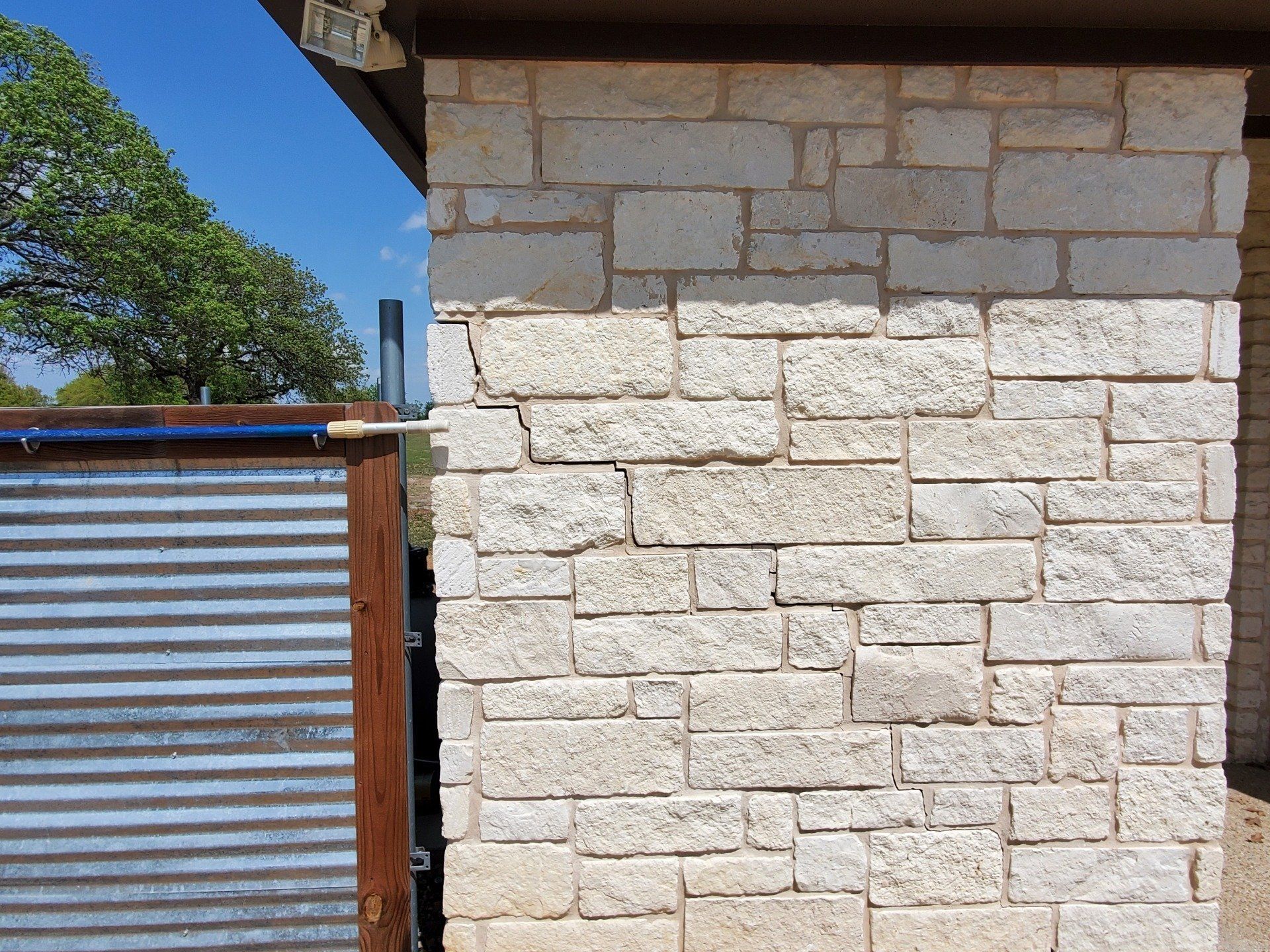
Understand What’s Going On With Your Foundation
Every homeowner who calls us asks the same three questions. What’s happening to my house? What can I do about it? And who can I trust? This page answers all three.
What’s happening to my house?
A foundation problem feels like a medical scare: confusing symptoms, a big unknown bill, and everyone you ask has a different opinion. So let’s do what a good doctor does and start with the symptoms.
Outside the house
- Stair-step cracks in brick or limestone that follow the mortar joints upward, usually near corners
- Separation gaps where trim, stone columns, or frieze boards pull away from the wall
- Cracks near rooflines and lintels, above garage doors and windows
- Cracked patios, driveways, and pool decks that have sunk out of grade
- Water ponding at the slab edge hours after rain has stopped
Inside the house
- Drywall cracks spreading diagonally from door frames and window corners
- Doors and windows that stick, won’t latch, or swing on their own
- Sloping or bouncy floors, the rolling-marble test is real
- Cracks across slab floors, visible where flooring is pulled back
- Gaps between walls and ceiling or floor that open and close with the seasons
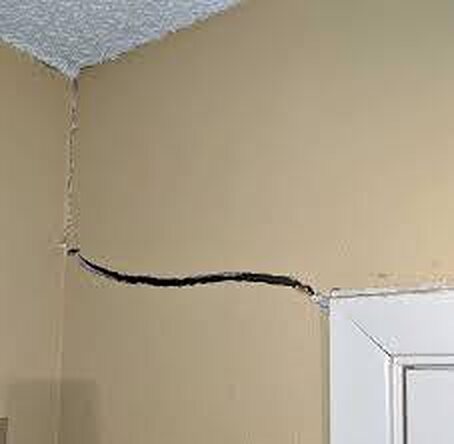
Diagonal drywall cracking: the slab below has moved.
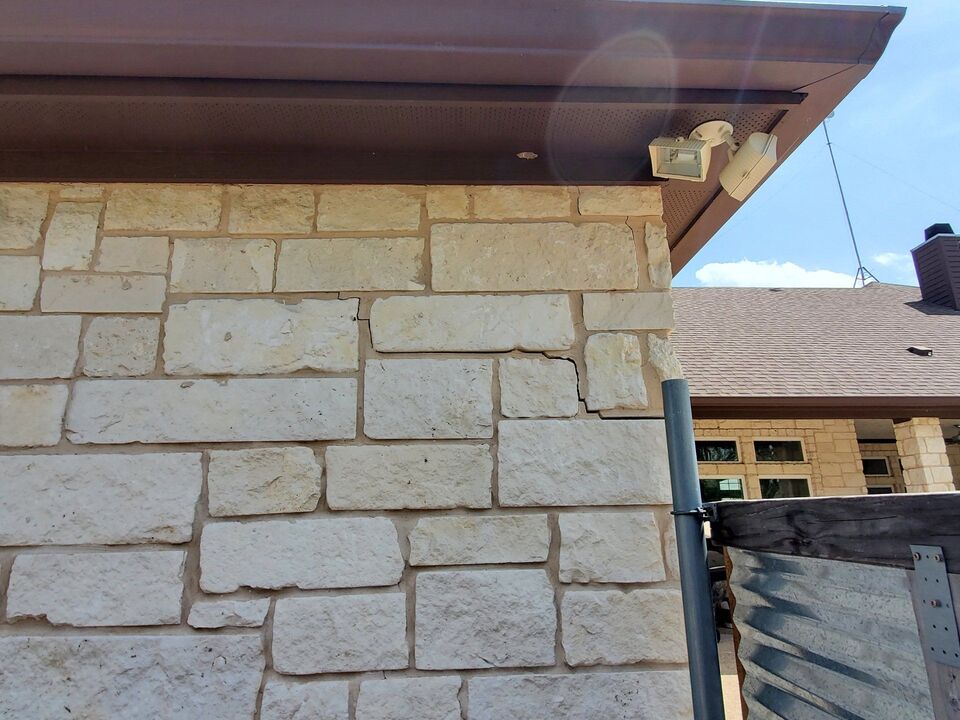
Masonry cracking near the roofline: movement has reached the top of the wall.
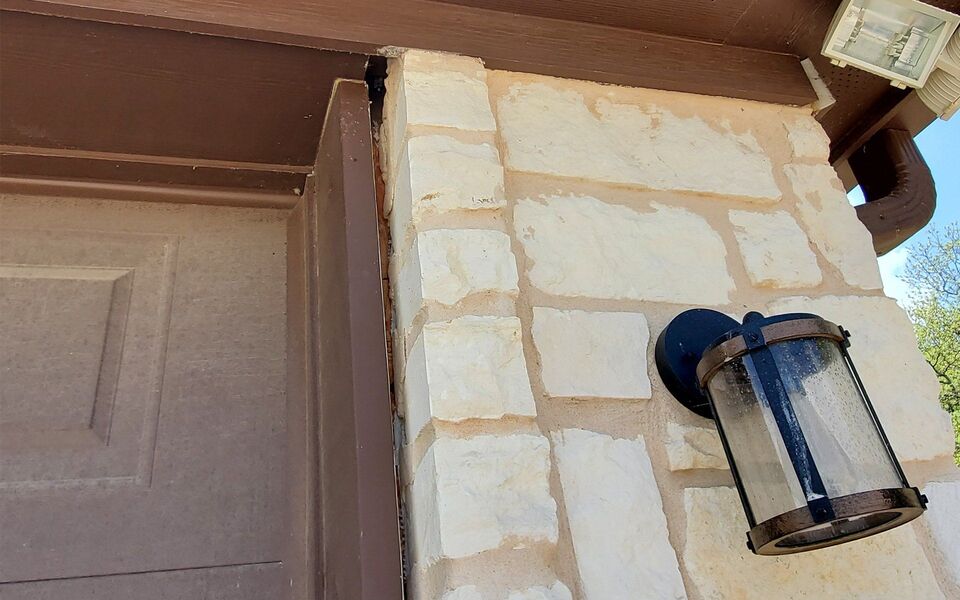
Separation gaps: one part of the structure is settling away from another.
One hairline crack after a dry summer isn’t an emergency. A pattern of these symptoms, especially symptoms that grow or come back, means the foundation is moving and it’s time to have someone look.
Central Texas clay 101
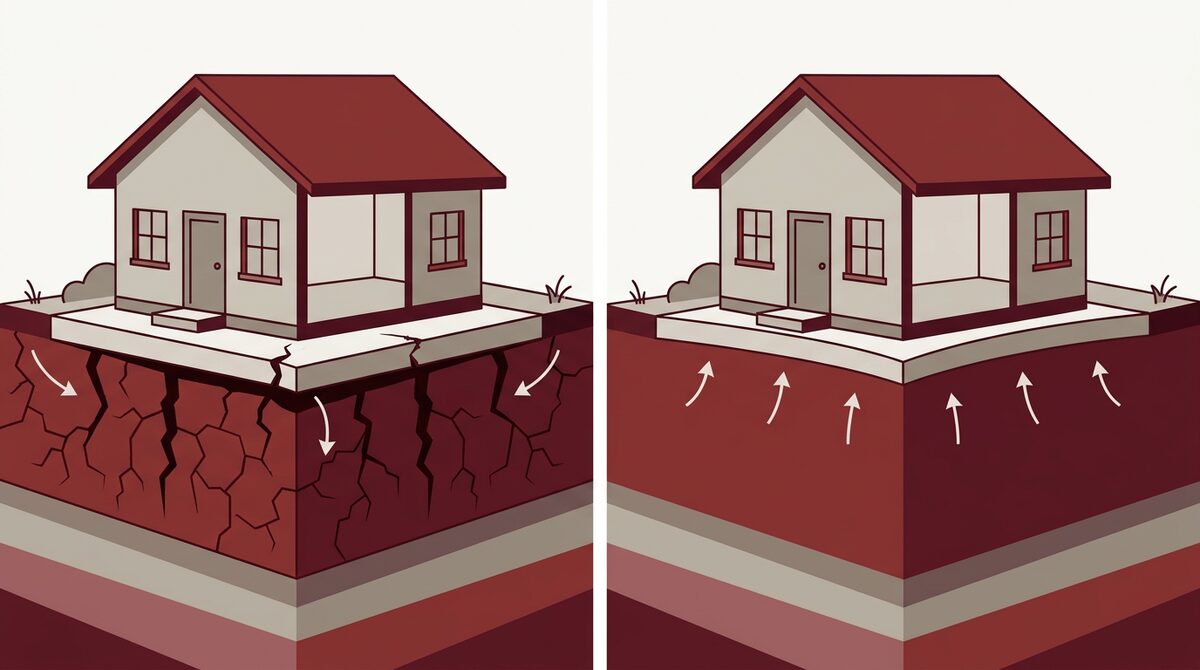
From Waco down through Temple, Killeen, and the Brazos Valley, most homes sit on expansive clay. The clay absorbs water and swells; it dries and shrinks. A wet winter can raise soil an inch or more, and a Texas summer takes it right back.
Your foundation could handle that if the whole house rose and fell together. It doesn’t. The perimeter soil swings wet-to-dry fast while the soil under the middle of the house barely changes. The edges move, the center doesn’t, and the structure bends until it cracks.
That’s why foundation repair is practically a public utility here, and why anything that evens out soil moisture (drainage, watering habits, root barriers, soil treatment) is foundation medicine.
What can I do about it?
Six treatments, one per diagnosis. Here’s the whole toolbox, in plain terms.
Pressed piers
For a slab that has settled: concrete or steel piers carry the house past the unstable clay. The structural fix.
Slab repairPier & beam repair
For older homes on crawl spaces: new piers, new beams, or a re-level on the piers you already have.
Pier & beam / levelingSoil stabilization
For the cause itself: StableSoil injection stops the clay’s shrink/swell cycle. Prevention and early-stage treatment.
StableSoilConcrete lifting
For sunken concrete with sound soil: polyurethane raises slabs, patios, and pool decks in under a day.
Concrete liftingDrainage
For the water feeding the problem: french drains, surface drains, and grading that move water away from the slab.
Drainage systemsEngineering
For proof, not opinion: inspections, reports, and repair plans from our in-house professional engineer.
Engineering servicesHow do I not get taken advantage of?
Ronnie built this company because he watched homeowners get prescribed whatever the salesman had on the truck.
A company that only installs piers will find a reason your house needs piers. That’s not dishonesty so much as a limited toolbox, but you pay for it either way. The defense is simple: insist on a diagnosis before you accept a prescription.
Get a second opinion. If you’ve been quoted a big repair, we’ll look at it free of charge. Sometimes we confirm the quote. Sometimes we save you five figures. Either way you’ll understand your own house better.
What a real diagnosis includes
- Elevation readings across the foundation, not a glance at a crack
- A walk of the whole property, including water flow and trees
- An explanation you can repeat to your spouse without notes
- A written plan and price, with the method matched to the cause
- The option of an engineer’s report, from a PE on our own staff
- A transferable warranty in writing before work starts
The questions homeowners ask us
How much does foundation repair cost?
Anywhere from a few thousand dollars for a re-level or small concrete lift to five figures for a full pier installation. The honest answer requires elevation readings and a look at your soil, which is why the estimate is free and written. Beware of anyone who quotes a foundation repair over the phone.
Are foundation cracks ever normal?
Hairline cracks in concrete and mortar are common as materials cure and seasons change. The warning signs are patterns: cracks that widen, stair-step through masonry, return after patching, or arrive together with sticking doors and sloping floors.
Does homeowners insurance cover foundation repair?
Usually not for soil movement, which is the cause of most foundation damage in Central Texas; policies commonly exclude earth movement and settling. Coverage sometimes applies when a plumbing leak caused the damage. Check your policy, and get a diagnosis that identifies the cause either way.
How fast do I need to act?
Foundation movement usually develops over time rather than overnight. Months of waiting can add cost; a week spent getting second opinions generally will not. Take the time to choose the right repair.
Will foundation repair damage my landscaping?
Perimeter pier work requires excavation at each pier location, and we backfill and restore as we finish. Concrete lifting and StableSoil treatment disturb almost nothing.
Should I fix the foundation before selling my house?
In Texas you must disclose known foundation problems. A completed repair with a transferable warranty usually nets more than a price-drop negotiation with a scared buyer. Our engineer can document the condition either way.
What if another company already quoted me?
Bring us the quote. Second opinions are free, and we will tell you plainly whether the prescribed repair matches the problem. Sometimes it does. Often it is more repair than the house needs.
Do you fix commercial buildings?
Yes. Brick veneer cracking, lintel failures, and settling slabs on commercial structures respond to the same diagnosis-first approach. Call (254) 863-8800 and tell us what you are seeing.