
House Leveling in Waco, TX
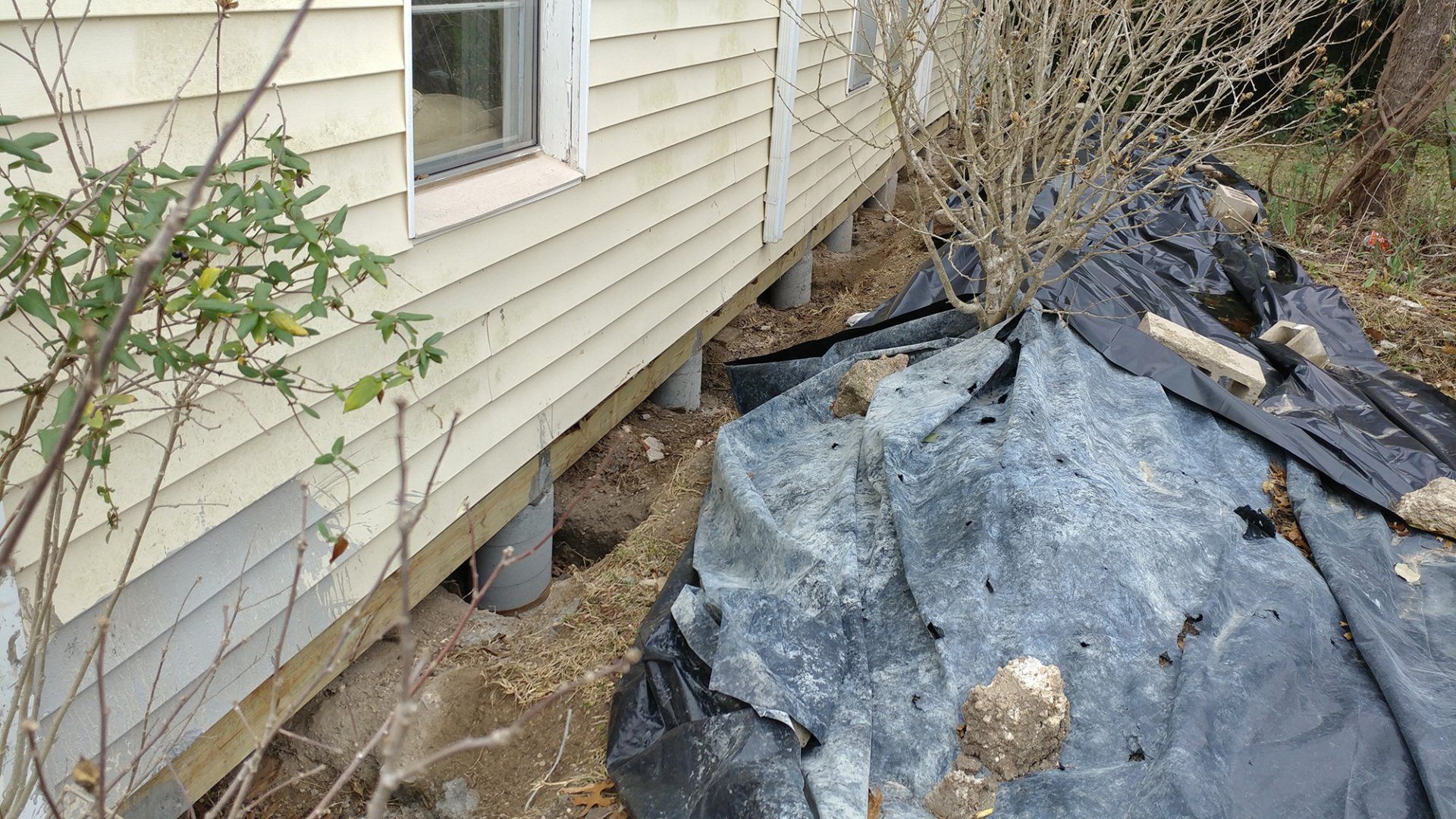
When the marble rolls across the floor on its own, the house is telling you something. We bring the whole structure back on the level, often on the piers you already own.
- Free Estimates
- Most Re-Levels Done in a Day
- Transferable Warranties
What is house leveling?
House leveling returns a home that has drifted out of level to an even, functional plane by adjusting the supports underneath it: shimming and resetting existing piers, adding piers where spans have started to sag, or lifting settled sections of a slab. The goal is measured in elevation readings and in daily life, meaning doors that latch, floors that feel solid, and cracks that stop growing, rather than a laser-perfect plane no lived-in house ever holds.
How does a house get out of level?
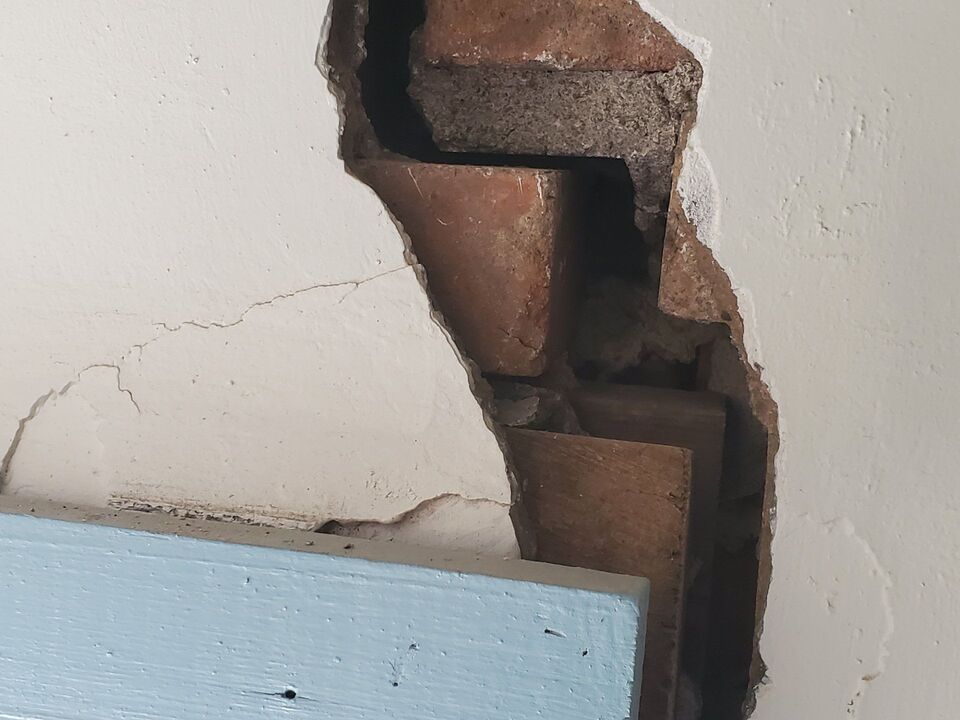
A house gets out of level one season at a time. Expansive clay swells under one corner and shrinks under another, piers settle at different rates, and the structure slowly racks until the whole frame sits crooked on its supports.
Because the drift is gradual, most owners notice the side effects before the slope:
- Furniture that rocks on a floor that used to be flat
- Several doors through the house misbehaving at once
- Cracks reopening after every repaint
- Windows that need a shoulder to open or close
One sticking door can be humidity. A pattern across the house is geometry, and geometry is measurable. The education page walks through how to tell the difference.
How do we level a house?
The method follows the foundation. Pier & beam homes are leveled from the crawl space, slab homes from the ground down, and in both cases we use what you already own before adding anything new.
Re-Level Existing Piers
For pier & beam homes with sound supports. We shim, adjust, and reset the piers you have, raising the frame back to even. Most of these finish in a day.
Add Supporting Piers
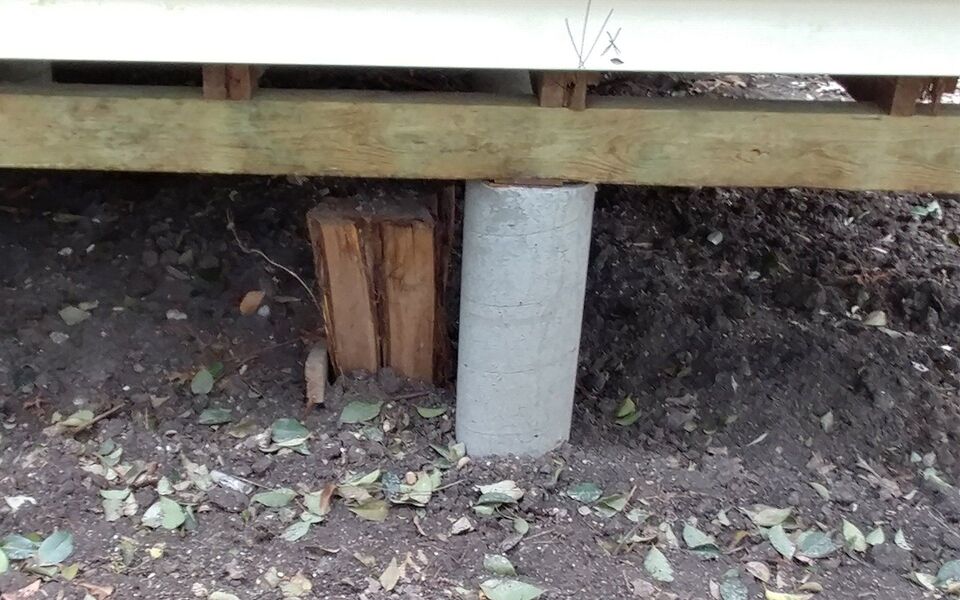
Where spans sag between supports or old piers have failed, we add cast-in-place Sonotube or block & pad piers exactly where the structure needs them.
Slab-Home Leveling
Slab foundations level on pressed piers or polyurethane lifting, depending on whether the soil failed or just the slab settled. The full story lives on its own page.
| Approach | Cost tier | Best for | Typical timeline |
|---|---|---|---|
| Re-level existing piers | $ | Pier & beam, supports still sound | Usually one day |
| Add supporting piers | $$ | Sagging spans, failed piers | One to three days |
| Slab leveling | $–$$$ | Slab homes; see foundation leveling | Under a day to three days |
What does house leveling cost in Waco?
Re-leveling a pier & beam house on its existing piers is one of the most affordable structural repairs we do, because the materials are mostly already under your house. The price climbs only when piers have to be added or replaced.
The estimate turns on four questions:
- How far off level is it? The elevation survey maps the drift in inches, room by room.
- Can your piers be reused? Sound piers mean shims and labor instead of concrete.
- How many new supports, if any? Each added pier is a known, itemized cost.
- What caused the drift? If water or soil movement did this, the plan addresses the cause, not just the symptom.
You get the answers in a free written estimate with a firm price, and a plain recommendation you can hold us to.
How level should a house actually be?
Functionally level, not laboratory level. Every house built on Central Texas clay moves a little with the seasons, and chasing perfection on a living structure means over-lifting, which cracks the very finishes you’re trying to protect.
Our target is the point where doors latch, floors feel right, and the structure carries its loads evenly, confirmed by elevation readings, not by eyeball. We lift gradually and measure as we go, because a controlled quarter inch at a time is how you level a house without hurting it.
Every leveling plan can be reviewed by the professional engineer on our own staff. If someone has quoted you a dramatic lift, that review is a phone call away and a good use of it.
Leveling, foundation repair, or cosmetic patching: which do you need?
Cracked drywall has three very different price tags depending on what’s underneath it. Patching hides it, leveling corrects it, and foundation repair stops it from coming back.
| Cosmetic patching | House leveling | Foundation repair | |
|---|---|---|---|
| What it addresses | The symptom on the wall | The geometry of the structure | The failed soil or supports beneath it |
| When it’s right | After the structure is stable | Drift without soil failure | Active settlement, failed piers |
| If used too early | Cracks return each season | May drift again without the cause fixed | N/A, it addresses the cause |
| Relative cost | $ | $–$$ | $$–$$$ |
The right order is cause, then geometry, then cosmetics. Skip a step and you pay for the same drywall twice. If piers or soil are the cause, see pier & beam repair or slab repair first.
How does house leveling work, visit by visit?
Measured, gradual, and verified. Most homes are back on the level within a day or two of work.
Elevation survey
We map the whole floor plan in readings, so you can see exactly which corners have dropped and by how much. Ronnie runs these visits himself.
Leveling plan & firm price
The written plan shows which piers get adjusted, where any new supports go, and what the lift sequence will be, with one firm number at the bottom.
Lift in stages
Crews raise the structure gradually, checking readings as they go, so the frame settles evenly into its corrected position without stressing finishes.
Walk-through & warranty
We test the doors together, compare before-and-after readings, and register the transferable warranty to the house.
What the free estimate includes: a room-by-room elevation survey, crawl-space or perimeter inspection, the cause of the drift in plain English, and a written leveling plan with a firm price.

Why measure twice before lifting once
Ronnie Wiethorn’s rule for leveling came from his inspector years: the houses that got hurt were the ones lifted fast by crews that never measured. So at The Foundation Doctor, the tape and the level come out before any jack does.
- Elevation readings before, during, and after every lift
- Around 20 years of Central Texas foundations behind the plan, 70+ combined on the crew
- Reuse-first philosophy: your existing piers before new ones, engineer review on request
- Transferable warranties that follow the house to its next owner
Homeowners on getting their level floors back
Where we level houses
Anywhere the Blackland Prairie tilts a floor: Waco, Temple, Killeen, Bryan, College Station, McGregor, and surrounding Central Texas. Bryan & College Station line: (979) 803-1133.
House leveling questions
How much does house leveling cost in Waco?
A re-level on sound existing piers is often the least expensive structural repair we offer, frequently a fraction of a full pier job. The price rises with the number of piers that need replacement and how far the structure has drifted. The estimate is free and the price is written before work starts.
How long does house leveling take?
Most re-levels finish in a single day. Jobs that replace failed piers or add new ones usually run one to three days.
Will leveling crack my drywall?
Lifting a settled structure can flex finishes that settled with it, so hairline cracking is possible and existing cracks usually close as the house comes back to level. We lift gradually, in small controlled increments, to keep movement gentle.
Is my slab home covered on this page?
This page covers pier and beam homes, which is where whole-house leveling lives. If your home sits on a concrete slab, foundation leveling is the service you want, and we do that too.
Does house leveling help when selling my home?
Yes, and this matters in a market like Killeen where military moves put homes on the market on a schedule. A documented leveling with a transferable warranty answers buyer hesitation before it starts: Texas sellers must disclose known foundation problems, and the warranty turns the disclosure into a selling point.
What are the signs a house needs leveling?
Several doors misbehaving at once, furniture that rocks on a floor that used to sit flat, cracks that reopen after every repaint, and slopes you can feel walking the hallway. One symptom can be humidity; a pattern across the house is geometry, and an elevation survey settles it.
How often does a house need re-leveling?
Once the cause is addressed, ideally never. A house re-leveled without fixing the water or soil problem that moved it will drift again, which is why our plans pair the lift with the cause, and why warranty adjustments exist if a corrected area ever needs fine-tuning.
Does homeowners insurance cover house leveling?
Usually not. Texas policies generally exclude damage from soil movement and settling, the cause of most unlevel houses here. Sudden events like a plumbing leak are the exception, and if one caused your problem, we document it during diagnosis for your claim.