
Soil Stabilization with StableSoil in Central Texas
Most foundation damage here starts in the dirt. StableSoil, our proprietary injection, calms expansive clay before it cracks your slab, or after it has started trying.
- Proprietary StableSoil Formula
- Safe for Lawns & Plants
- Most Treatments Done in a Day
What is soil stabilization?
Soil stabilization treats the expansive clay under and around a foundation so it stops shrinking and swelling with the seasons, using StableSoil, our proprietary, non-hazardous injection that penetrates 6 to 10 feet into the ground. Instead of repairing the concrete after the soil moves it, stabilization goes after the cause: the Blackland Prairie clay itself, which can otherwise cycle a foundation up and down year after year. Treated soil holds its volume, so the foundation above it holds its position.
Why does Central Texas clay wreck foundations?
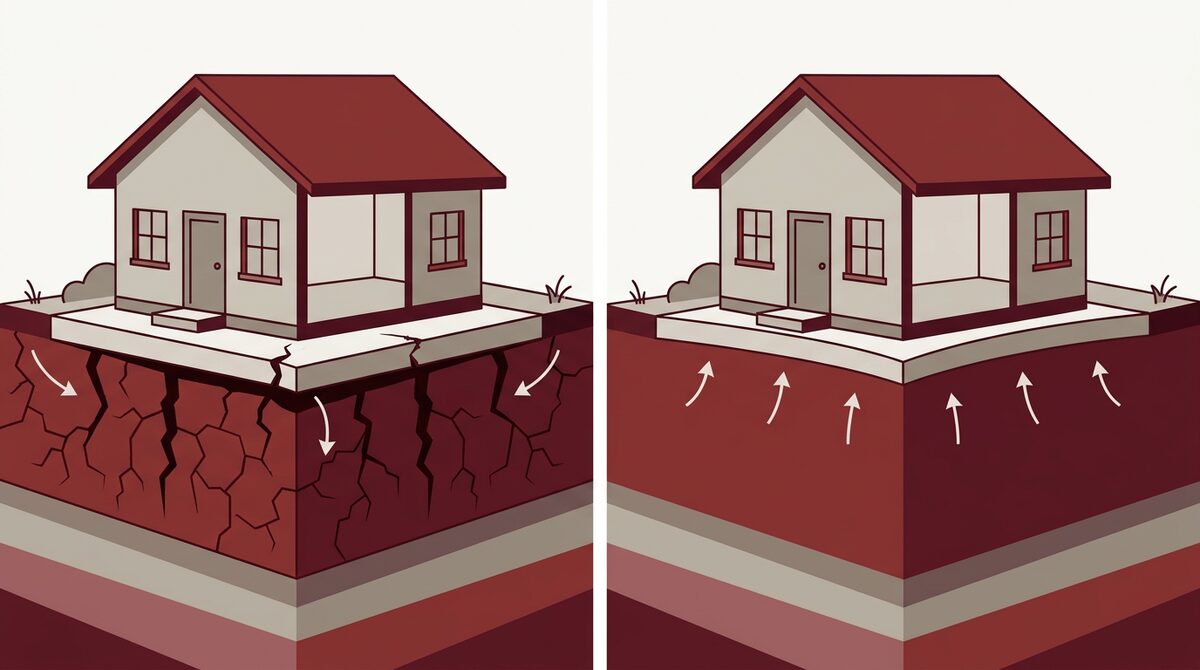
The clay under Central Texas absorbs water like a sponge, swelling when it rains and shrinking hard in drought. A foundation resting on it rides that cycle, and the parts of the slab over the wettest and driest soil ride it unevenly.
You can watch the same physics in any summer backyard:
- Gaps opening in the dirt along the slab edge by August
- Soil crusted and cracked like dry pond mud
- Doors sticking every summer, easing every winter
- Hairline cracks that breathe with the seasons
Piers answer soil movement by reaching below it. StableSoil answers it by stopping the movement where it starts, and for the right house at the right stage, that’s the cheaper and cleaner fix.
When is StableSoil the right prescription?
Two moments in a foundation’s life, one before the concrete truck arrives and one after the first symptoms show, plus the pairing that makes both stick.
Before the Slab Is Poured
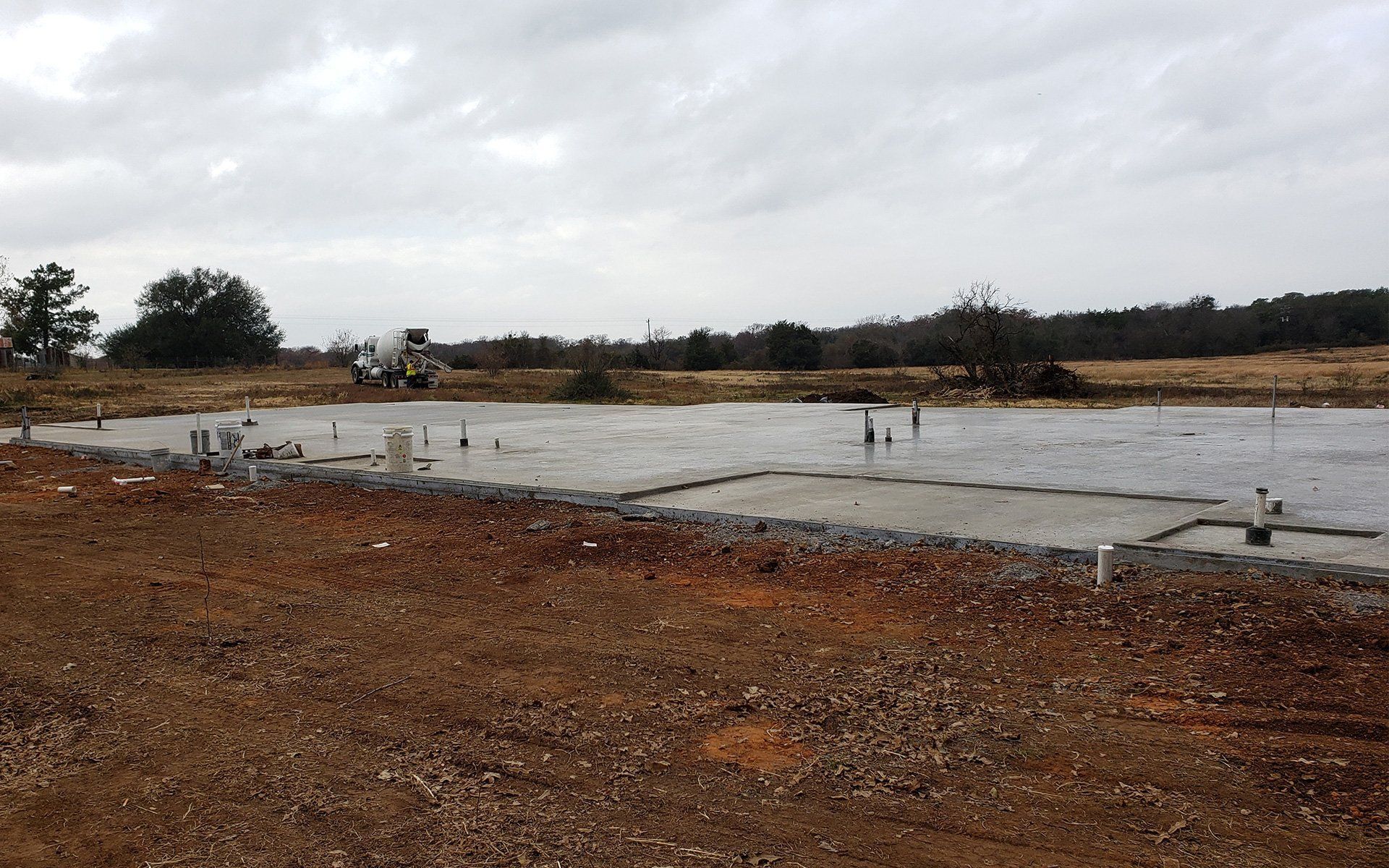
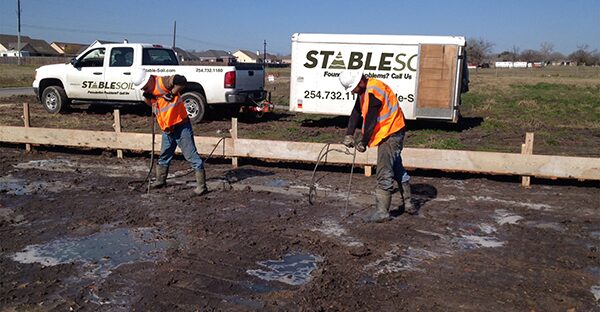
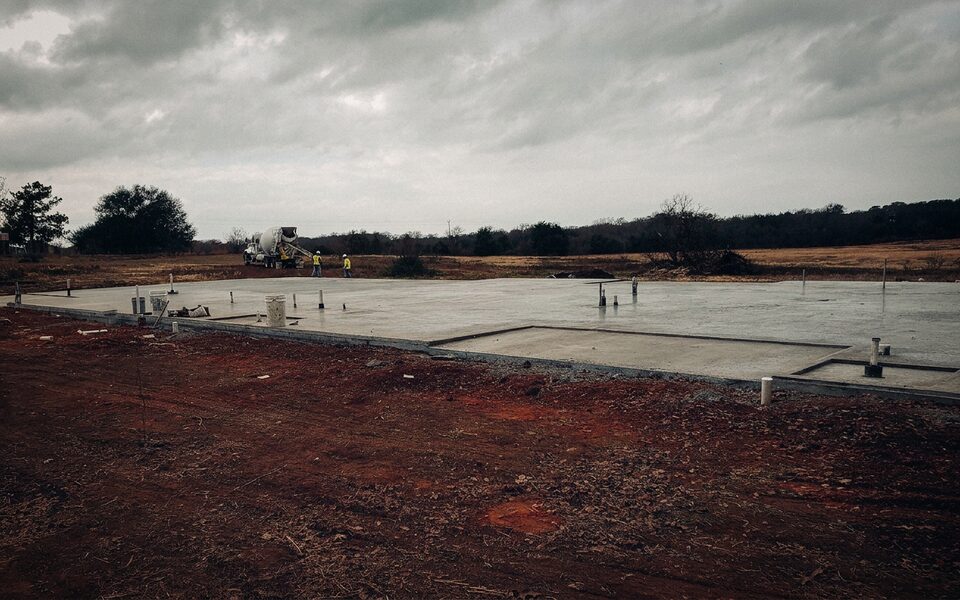
Injected across the pad on 3-to-4-foot centers before the pour, protecting post-tension and rebar slabs from differential movement for the life of the house. One day, no schedule slip.
Around an Occupied House
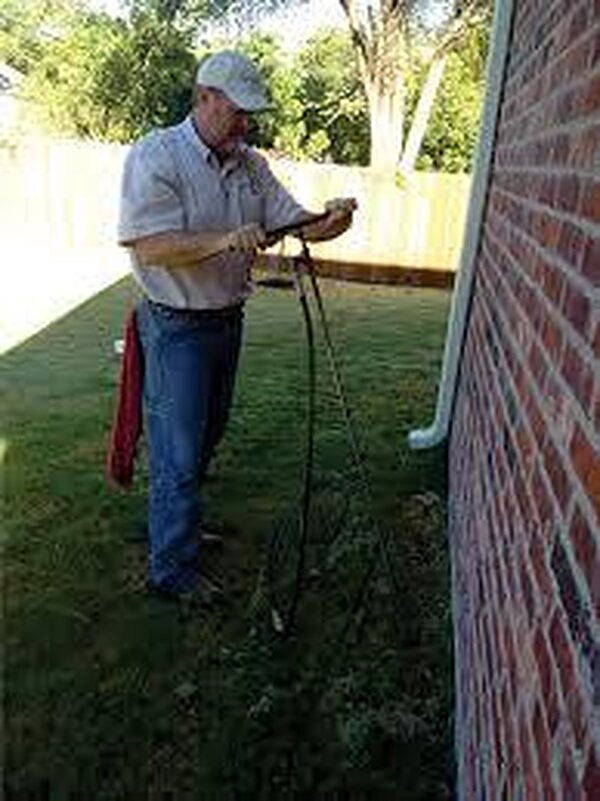
Perimeter injection where the wet-dry cycle does its damage, paired with watering guidance and root barriers where trees are drinking the clay dry.
Safe for flowerbeds, lawns, and pets
With Drainage Correction
Stabilized soil plus managed water is the full prevention plan. If rain ponds at the slab edge, we fix the pond and the clay in the same visit.
| Application | Cost tier | Timing | Protects |
|---|---|---|---|
| Pre-pour (new construction) | $ | One day before the pour | The slab for its whole life |
| Perimeter (existing home) | $–$$ | Usually one day | The zone where seasons hit hardest |
| With drainage correction | $$ | Days, one mobilization | Soil and water together |
What does soil stabilization cost?
For homes with early-stage movement, stabilizing the soil can save thousands of dollars over structural repair, because you’re treating the cause before the concrete needs rescuing. Pre-pour treatment is the cheapest foundation repair a builder will ever buy, since it prevents the repair entirely.
The estimate comes down to:
- Treatment area. A full pad, a perimeter, or one troubled side of the house.
- Injection depth and spacing. Set by the soil, verified on site.
- What the water is doing. If drainage is feeding the problem, the plan prices both together.
- How far movement has gone. If the slab already needs structural help, we’ll say so and price piers honestly beside it.
The inspection and the written price are free, and the recommendation is the one Ronnie would give his own house on the same soil.
Is it too late to stabilize, or too early to pier?
There’s a window where soil treatment is the whole answer, and knowing whether your house is inside it is the entire diagnosis. Treat too late and you’re stabilizing soil under a slab that already needs lifting; pier too early and you’ve bought surgery for a patient who needed a prescription.
Elevation readings and a property walk place your home on that timeline. Where the movement is early and seasonal, StableSoil holds the line. Where sections have already dropped, we pair treatment with leveling or piers, and the plan can be verified by our in-house professional engineer.
Think of a slab as a boat floating on the soil. You can’t stop a boat from moving with the water, but you can calm the water.
StableSoil, piers, or a watering program: what actually holds the clay still?
Homeowners hear all three pitched as the answer to seasonal movement. They solve different amounts of the problem, for different money.
| StableSoil injection | Pressed piers | Watering program | |
|---|---|---|---|
| What it does | Stops the clay’s shrink-swell cycle | Carries the house below the active clay | Slows drying at the slab edge |
| Right when | Movement is early or preventable | Soil has already failed under the slab | As maintenance, never as the cure |
| Permanence | Permanent fix for differential movement | Permanent for piered sections | Lasts as long as your discipline |
| Relative cost | $–$$ | $$–$$$ | Water bill, forever |
We include watering guidance with every treatment because it helps at the margins. We just won’t sell it to you as a repair, because it isn’t one.
How does a StableSoil treatment day go?
Quietly. No excavation, no equipment parked on your lawn for a week, and the flowerbeds survive.
Walk & read the property
Elevation readings, soil condition, drainage paths, and tree roots: the whole picture of what the clay is doing to your foundation, gathered in one visit.
Map the injection plan
The written plan marks injection points, depths, and spacing, with a firm price and a plain answer on whether treatment alone is enough.
Inject the StableSoil
The crew works probe by probe, pushing the formula 6 to 10 feet down where the clay actually moves. Most homes finish in a single day.
Set the after-care
You get watering guidance, any root-barrier or drainage recommendations, and a follow-up reading to confirm the ground has settled into its new habit of staying put.
Safe where you live: StableSoil is non-hazardous and earth-friendly, safe around lawns, gardens, pets, and kids. The treatment changes how the clay handles water, not what grows above it.
An ounce of prevention, sold by a repairman
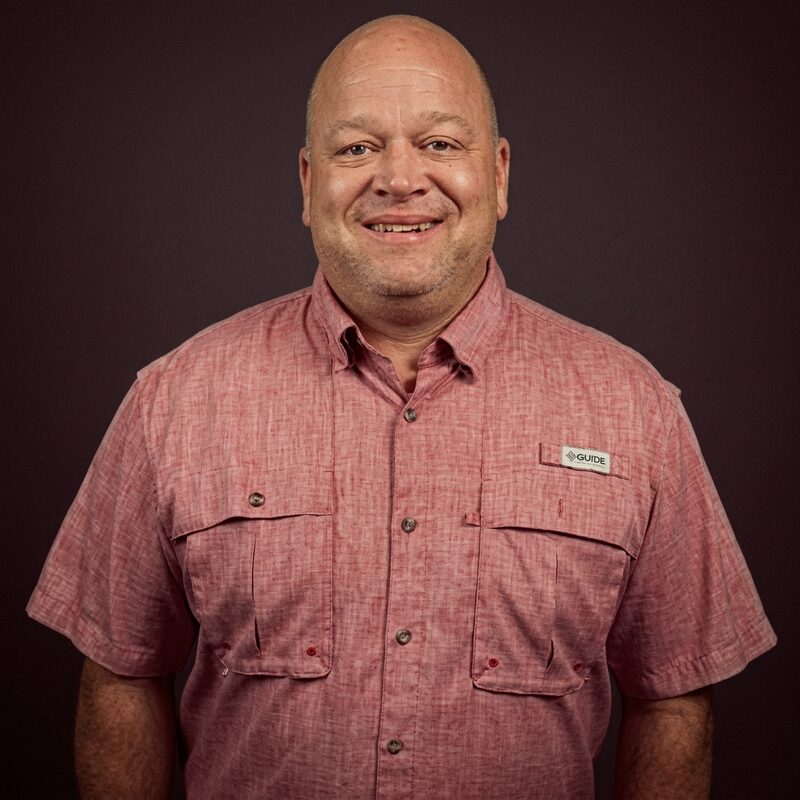
Most of Ronnie Wiethorn’s work is fixing foundations after the clay has done its damage. StableSoil is the appointment that keeps you out of the waiting room, and it says something that the repair company is the one recommending it.
- Proprietary formula, developed for Central Texas expansive clay
- Prescribed by the same people who see untreated soil’s damage daily
- Plans verifiable by our in-house professional engineer
- Locally owned in Waco, treating the soil we grew up on
What property owners say about the work
Where we stabilize soil
Wherever the Blackland Prairie clay runs: Waco, Temple, Killeen, Bryan, College Station, McGregor, and surrounding Central Texas. Bryan & College Station line: (979) 803-1133.
Soil stabilization questions
Is StableSoil safe around plants, pets, and people?
Yes. StableSoil is non-hazardous and earth-friendly. It treats the clay itself and is safe around lawns, gardens, pets, and the people who live above it.
How long does soil stabilization last?
Treated soil stops responding to the wet/dry cycle permanently. The stabilizer changes how the clay handles moisture, so the differential movement that damages foundations is eliminated rather than paused.
How is this different from watering my foundation?
Watering tries to keep the clay evenly damp year-round, which takes discipline and still swings with the weather. StableSoil removes the clay's ability to shrink and swell in the first place. We do recommend balanced watering on untreated sides of a home as part of a prevention plan.
How much does StableSoil cost compared to piers?
For homes with early-stage movement, stabilizing the soil can save thousands of dollars compared to structural repair, and for new construction it is a small line item that prevents the repair bill entirely. Estimates are free.
How long does the injection take?
Most projects are finished in one day, for both pre-construction subgrade treatment and perimeter injection around an existing home.
Can StableSoil fix a foundation that has already moved?
It stops the movement from continuing, which is half the cure. Sections that have already dropped need leveling or piers to recover their elevation, and the honest plan often pairs the two: repair what moved, stabilize why it moved.
When is the best time to stabilize soil?
Before symptoms, or at the first small ones. Treatment costs the least and does the most while the foundation is still where the builder left it. Second-best time: alongside a repair, so the fix you pay for stays fixed.
Does StableSoil work under an existing slab?
Yes, through perimeter injection. The perimeter is where seasonal wet-dry swings hit hardest, so treating that zone calms the movement that does the damage. New construction gets full-pad coverage before the pour.