

Foundation Repair Cost in Waco, TX
What the work actually costs, what moves the number up and down, and why two bids on the same house can differ by thousands. Then estimate your own range in about thirty seconds.
- Free Written Price
- No Charge For The Inspection
- Transferable Warranties
How much does foundation repair cost in Waco?
Across Texas, a moderate foundation repair typically runs $3,300 to $8,500, and most homeowners land somewhere around $5,000 to $6,500. Pressed concrete piers, the most common repair on Central Texas clay, average $450 to $900 per pier. Small jobs sit well below that band and large ones sit above it: lifting a sunken patio with polyurethane foam often runs a few hundred dollars to about $1,500, while a full house leveling on fifteen or more piers can pass $10,000.
These are Texas market ranges for planning, not a quote for your house. Your price comes from measuring the property.
Estimate your foundation repair cost
Four questions, no email required, no phone number. This gives you a planning range built from the same market figures above, so you walk into any estimate knowing roughly what you are looking at.
What different foundation jobs cost
Foundation repair is not one price. It is four or five very different jobs that happen to share a name. Here is roughly where each one sits.
Bands are Texas market figures for planning, not quotes. Pier counts drive nearly all of the movement between them.
The single most useful thing to understand: pier count is usually the largest factor in a foundation estimate. Piers install roughly every six to eight feet along the affected walls, so fifteen feet of settled wall is a handful of piers, while sixty feet is a much larger job on the same house, with the same crew and the same method.
What drives foundation repair prices up?
Price climbs when the repair has to reach further, carry more, or work around obstacles. None of these are upsells. They are physical facts about your house that a tape measure and an elevation survey will find.
- More affected wall. The biggest driver by far. Piers every six to eight feet means each additional stretch of settled wall adds piers at $450 to $900 apiece.
- Depth to stable soil. Where the clay runs deep, piers have to be pressed further to find bearing. Deeper systems cost more than shallow ones.
- Interior piers. Work inside the house means cutting and patching slab, moving furniture, and a longer schedule. Perimeter work is cheaper than interior work.
- Access. A tight side yard, a pool, mature trees, or a fence line the equipment cannot cross all add labor.
- How far it has moved. A house that has dropped two inches needs more lift, more monitoring, and more care than one that has drifted a quarter inch.
- Water still causing the problem. If a drainage fault or a plumbing leak drove the settlement, fixing the foundation without fixing the cause only buys time. That correction is real work with a real price.
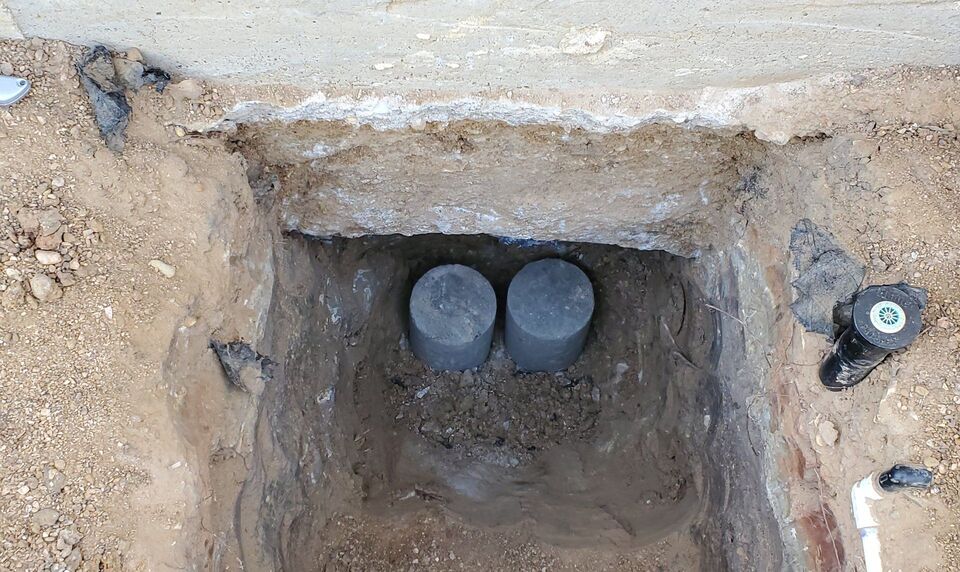
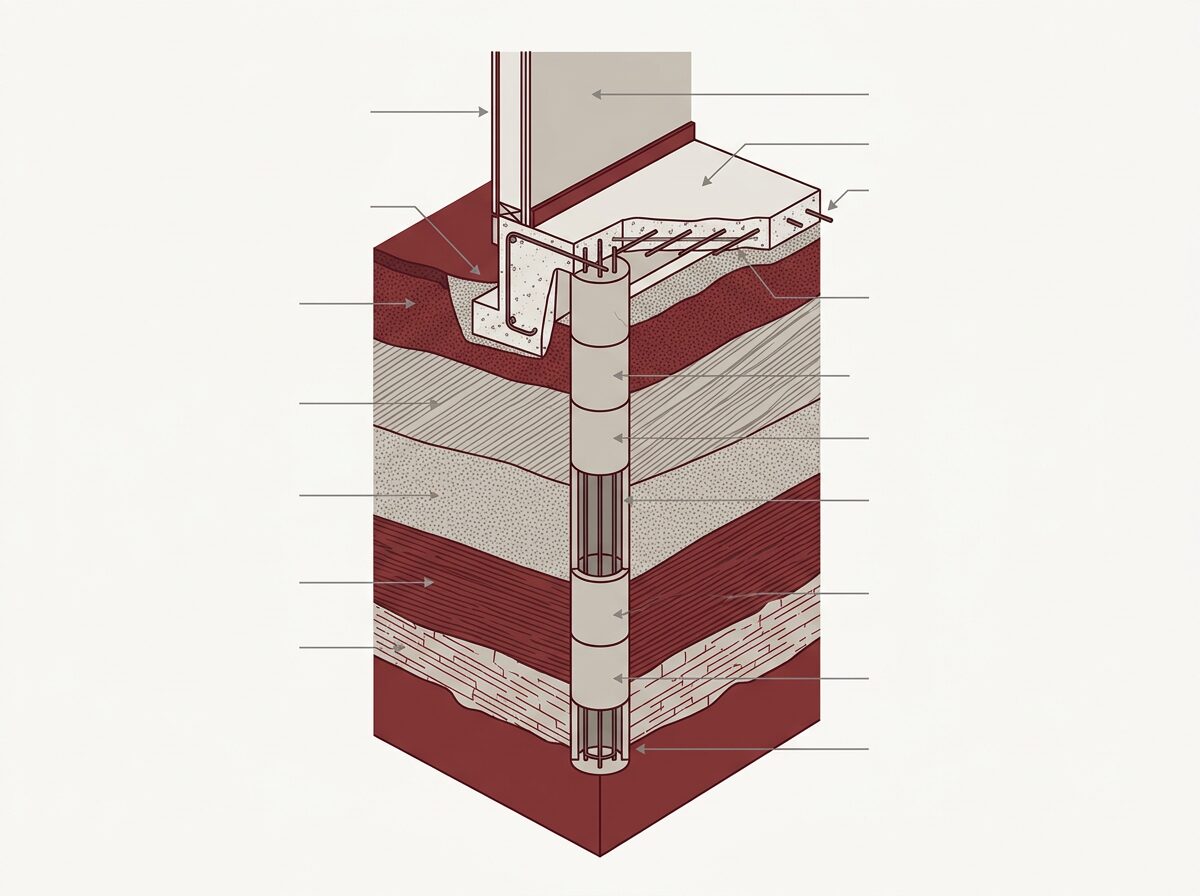
What drives foundation repair prices down?
Just as many things pull the number the other direction, and most homeowners never hear about them because they only get quoted the big version.
- Catching it early. A quarter inch of drift on one corner is usually a small job, and addressing it early tends to cost less than waiting for the movement to spread.
- Perimeter-only work. If the movement is at the edges, the repair stays outside and the price stays lower.
- Reusing what you own. On pier and beam homes, if the piers are sound and the house has simply drifted, re-shimming and adjusting costs a fraction of installing new piers.
- Foam instead of piers. Where the slab settled but the soil beneath is sound, polyurethane lifting runs a fraction of pier cost.
- Treating the soil instead of the structure. Early seasonal movement sometimes calls for soil stabilization rather than structural repair, at a fraction of the cost.
- One mobilization. If the drainage correction and the foundation work happen on the same trip, that prices better than two separate jobs.
Why do foundation repair quotes vary so much?
Three companies can look at the same house and return three different prices. Most of the time this is because they are quoting different scopes of work rather than different rates for the same work.
Why some companies cost more
- They quoted more piers. A company that prices the whole perimeter will always beat a company that prices only the settled wall, on paper.
- A deeper system. Steel-pressed pilings reach further and cost more than concrete. Sometimes the soil genuinely calls for them.
- Real warranty backing. A lifetime transferable warranty with free adjustments has a cost built into the price. A one-year warranty does not.
- Employees, not day labor. Trained crews, insurance, and supervision cost more than a truck and a subcontractor.
- Business overhead. Advertising, sales structures, and franchise fees are part of a company’s cost base and can be reflected in the estimate.
Why some companies cost less
- A smaller scope of work. An estimate covering fewer piers than the movement calls for will be cheaper, but may leave part of the problem unaddressed.
- Shallower piers. Stopping short of stable soil looks identical on day one and different after two seasons.
- A thinner warranty. Read what transfers, what expires, and what an adjustment costs after year one.
- The cause left untreated. Lifting a slab without correcting the water that sank it is a cheaper job and a shorter-lived one.
- Or genuinely lower overhead. A smaller local company without a large marketing budget can simply cost less. A low price is not a red flag on its own; what matters is whether the scope matches the problem.
How to compare two estimates: set the totals aside for a moment and line up the pier count, pier type, depth, warranty terms, and whether the cause of the movement is addressed. If those match and the prices still differ, that is a genuine price difference. If they do not match, the estimates describe different scopes of work.
How The Foundation Doctor prices a job
At The Foundation Doctor, pricing is built from the pier count, pier type, depth, and method the inspection supports, so the estimate reflects the scope of work rather than a set rate. We are locally owned and Ronnie Wiethorn carries out the inspections himself.
Inspections and written estimates are free, and the estimate is itemized so you can compare it line by line against any other bid you receive. Where the readings do not support structural repair, the recommendation will be to monitor rather than to proceed.

What each repair method costs relative to the others
We install six repair methods and recommend the one the readings call for, not the one with the best margin. Relative cost tiers, with the warranty each one carries.
| Method | Cost tier | Used when | Warranty |
|---|---|---|---|
| Polyurethane lifting | $ | Flatwork settled, soil beneath still sound | Per job |
| Re-level existing piers | $ | Pier & beam home, supports still sound | Silver · transferable |
| Block & pad piers | $ | Added crawl-space support on a budget | Silver · transferable |
| Sonotube piers | $$ | Failed or missing pier & beam supports | Gold · transferable |
| Pressed concrete piers | $$ | The common slab repair on Blackland clay | Gold to Platinum · transferable |
| Steel-pressed pilings | $$$ | Bedrock within reach; deepest bearing | Platinum · lifetime · transferable |
The warranty column matters as much as the cost column. A cheaper method with a thinner warranty is not always the cheaper decision. See exactly what each tier covers.
Initial price versus lifetime cost
The estimate is what you pay once. The lifetime cost is what the decision costs you over the years you own the house, and the two are not the same number.
- A repair that holds costs less than two repairs. Where a scope does not cover the full extent of the movement, the remaining work usually still has to be done later.
- Free adjustments have real value. Clay moves every season for as long as the house stands. A warranty that includes free re-leveling visits absorbs a cost that otherwise lands on you.
- Transferability is money at resale. A warranty registered to the house and transferable to the next owner is a document you hand a buyer instead of a negotiation you lose.
- Untreated movement compounds. Doors and windows stop closing, brick and mortar crack, plumbing under the slab comes under strain. Those repairs are separate from the foundation bill.
- Fixing the cause ends the cycle. Correcting drainage or stabilizing soil costs money once. Re-lifting the same slab every few years costs money forever.
Hidden costs to ask any foundation company about
These are the line items that turn a comfortable estimate into an uncomfortable invoice. Ask about every one of them before you sign anything, with us or with anyone else.
Plumbing tests
A leak under the slab can be the actual cause of the movement, so a static test before piers go in is often worth doing. Ask whether it is included or billed separately.
Engineer’s reports
Some sales and some lenders require a structural engineer’s letter. We have engineering in house, which keeps that from becoming a scheduling delay, but it is its own line item.
Landscaping and flatwork
Piers go in through the ground. Shrubs, beds, sprinkler lines, and sections of walk or patio may have to move. Ask who puts them back and whether that is in the price.
Interior finish repairs
Lifting a house closes some cracks and opens others. Drywall touch-up, paint, and re-setting doors are normal follow-on work and usually not part of a foundation contract.
Permits and inspections
Requirements differ by city across our service area. Ask whether permit costs are quoted or added.
Warranty maintenance terms
Some warranties are void if the homeowner does not maintain drainage or watering. That is not a hidden charge exactly, but it is a hidden condition. Read it.
Is foundation repair actually worth it?
When the answer is yes
- Elevation readings show real, measurable differential movement, not just a cosmetic crack.
- The movement is progressing season over season rather than holding steady.
- Doors, windows, or plumbing are being affected, which means the cost of waiting is now landing elsewhere in the house.
- You intend to sell. Texas sellers must disclose known foundation issues, and a completed repair with a transferable warranty is a far stronger position than an open problem.
When the answer is no, or not yet
- The crack is cosmetic. Hairline drywall cracks and normal concrete curing cracks are not foundation failure.
- Readings show the house is within tolerance and stable. Watchful waiting is a legitimate recommendation and we give it regularly.
- The real problem is water. In some cases correcting grading or downspout discharge reduces moisture-related movement without structural repair.
- The movement is seasonal shrink and swell that soil treatment can calm at a fraction of structural cost.
The short version: repair is worth doing when the elevation readings support it. Where they do not, monitoring is the appropriate recommendation, and you will get that in writing.
What the free estimate includes
Every price we give comes from the same process, whether the job turns out to be four piers or forty.
Ronnie comes out himself
The person reading your house is the owner, who has been doing this work for roughly two decades.
Elevation readings, room by room
We map the drift across the whole floor in inches, so the conversation is about measurements rather than opinions.
A cause, not just a symptom
We look at drainage, soil, trees, and plumbing indicators, because repairing a foundation without identifying what moved it is guesswork.
An itemized written price
Pier count, pier type, method, warranty tier, and total. In writing, before anything starts.
A plain recommendation
Including “you do not need this yet,” which is an answer we give more often than most companies do.
Yours to keep and compare
The written estimate is yours. Take it to other bids and line up the scope. There is no charge and no obligation attached to it.
The inspection and the written price cost you nothing, anywhere in our Central Texas service area, and there is no obligation attached to either. If you would like to talk through payment arrangements for a larger repair, ask the office when you book — (254) 863-8800, or (979) 803-1133 for Bryan and College Station.
Foundation repair pricing questions
How much does foundation repair cost in Waco, TX?
In the Texas market, a moderate foundation repair typically runs $3,300 to $8,500, with most homeowners around $5,000 to $6,500. Pressed concrete piers average $450 to $900 per pier. Small jobs such as lifting a sunken patio often run a few hundred dollars to about $1,500, while a full house leveling on fifteen or more piers can exceed $10,000. Pier count is the largest factor in the final figure.
Why is the foundation repair estimate free?
At The Foundation Doctor, the inspection is how the problem is diagnosed, so there is no charge for it. Ronnie Wiethorn carries out the inspection, takes elevation readings, and leaves an itemized written estimate. There is no obligation anywhere in our Central Texas service area.
How many piers will my house need?
Piers install roughly every six to eight feet along the affected walls, so the count follows the length of wall that has moved rather than the size of the house. One settled corner is often four to six piers, and a full perimeter on an average home can be fifteen or more. The elevation survey produces the exact number.
Why are foundation repair quotes so different from each other?
Usually because the estimates cover different scopes of work. Compare the pier count, pier type, depth, and warranty terms before comparing totals. An estimate covering fewer piers than the movement calls for will be cheaper, but may leave part of the problem unaddressed.
Do you charge for the elevation survey or the written estimate?
No. At The Foundation Doctor the elevation readings, diagnosis, itemized written price, and recommendation are all free. If the readings do not support structural repair, you get that in writing too.
Is it cheaper to repair a foundation early?
Often, yes. Cost tracks the number of piers, which tracks how much of the house has moved, so addressing a small area of movement early tends to cost less than waiting for it to spread.
What costs are not included in a foundation repair estimate?
Ask any company about plumbing tests, engineer letters, landscaping and flatwork replacement, interior drywall and paint repairs, and permits. These are normal parts of foundation work that are often quoted separately, so confirm which are included before signing.
Does foundation repair increase home value?
It tends to protect value rather than add to it. Texas sellers must disclose known foundation problems, so an unrepaired issue becomes a point of negotiation. A completed repair with a transferable warranty registered to the house is documentation you can hand to a buyer.
Can you give me a price over the phone?
We can give you a realistic range over the phone, and the estimator on this page produces one in about thirty seconds. An accurate price requires measuring the house, so the figure we stand behind comes from the elevation survey.
Is the cheapest foundation repair bid a bad sign?
Not on its own. A lower price can simply reflect a smaller local company with lower overhead. What matters is whether the scope matches: the same pier count, depth, method, and warranty terms.