
French Drain Installation in Waco, TX
The classic cure for water moving through your soil: a gravel-bedded, fabric-wrapped drain that intercepts groundwater before it ever reaches the foundation.
- Built Like We’ll Be Judged By It
- Flow-Tested Before We Leave
- Free Estimates
What is a french drain?
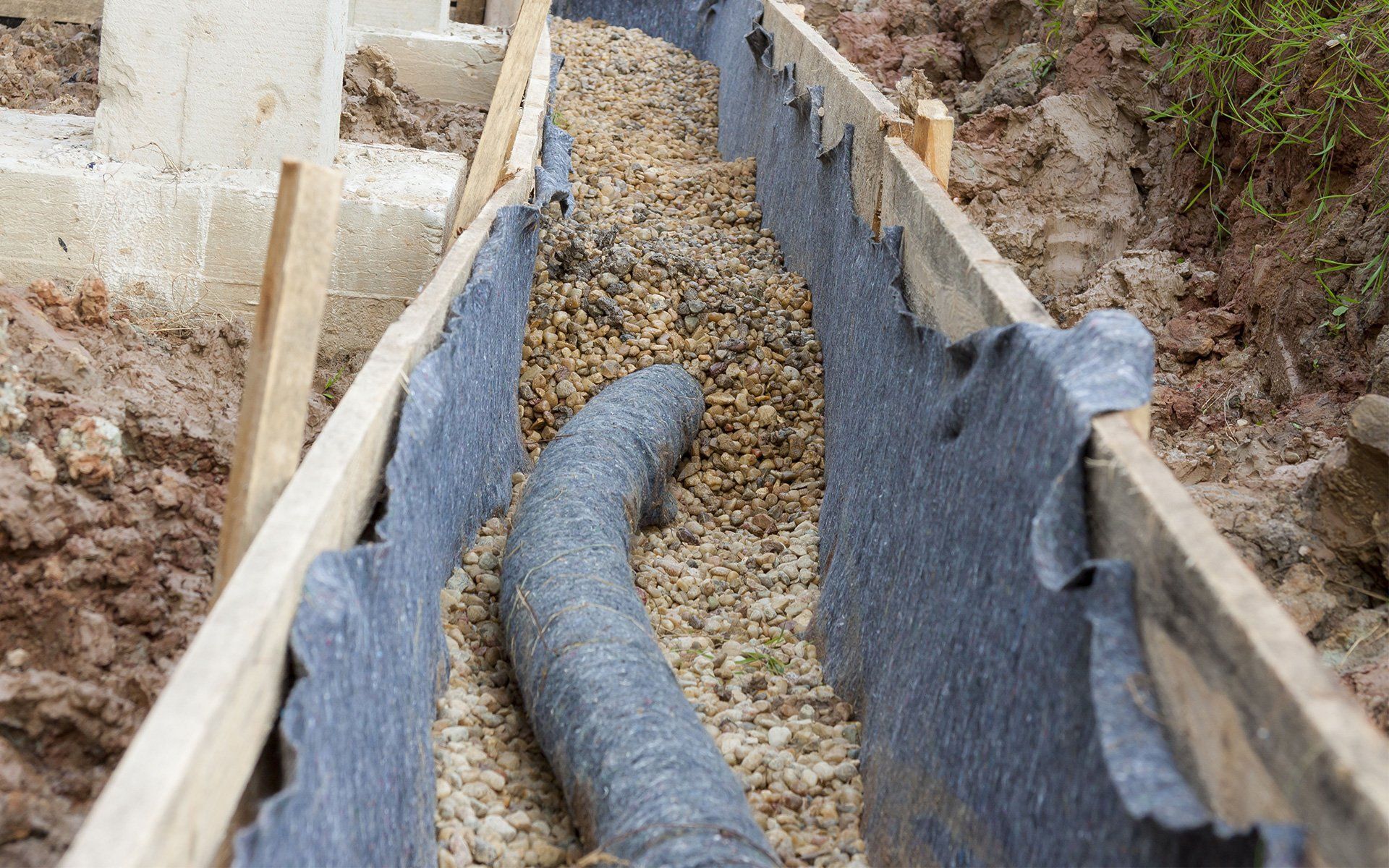
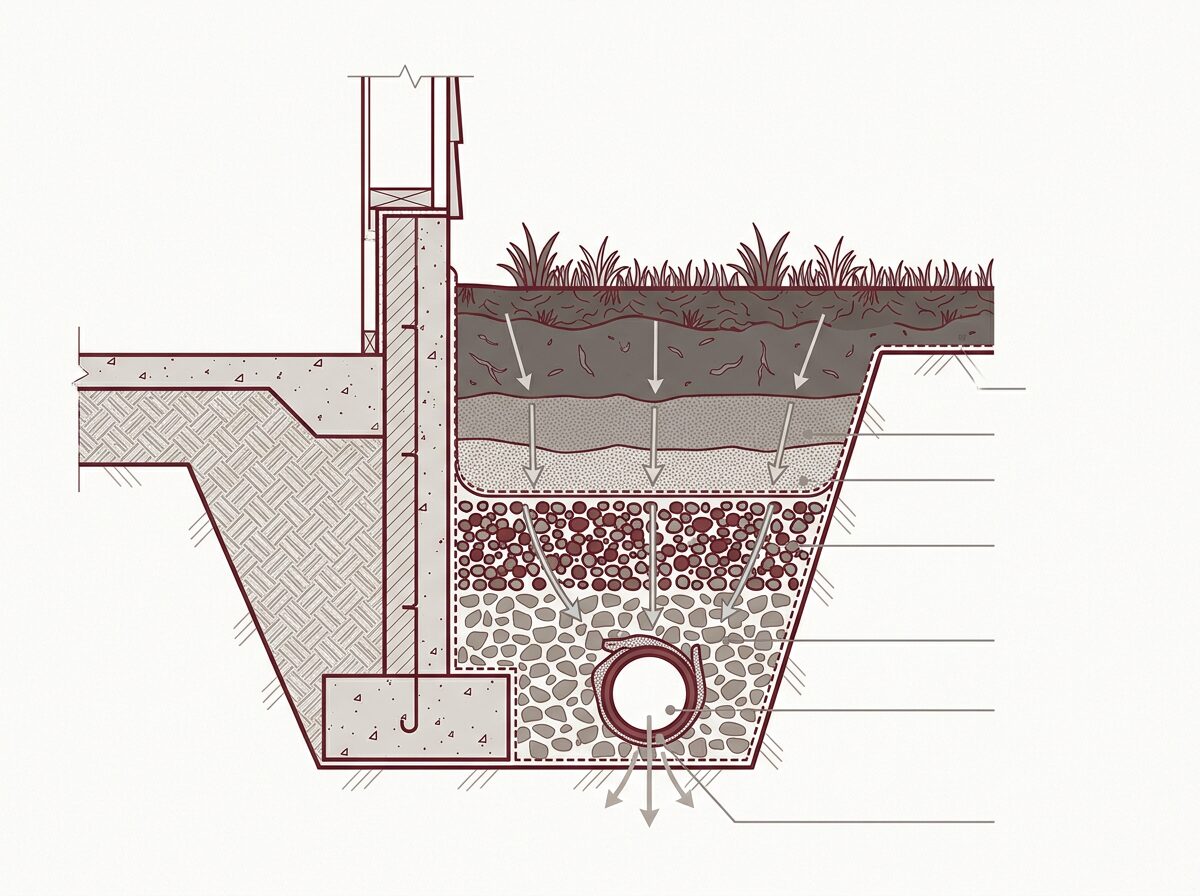
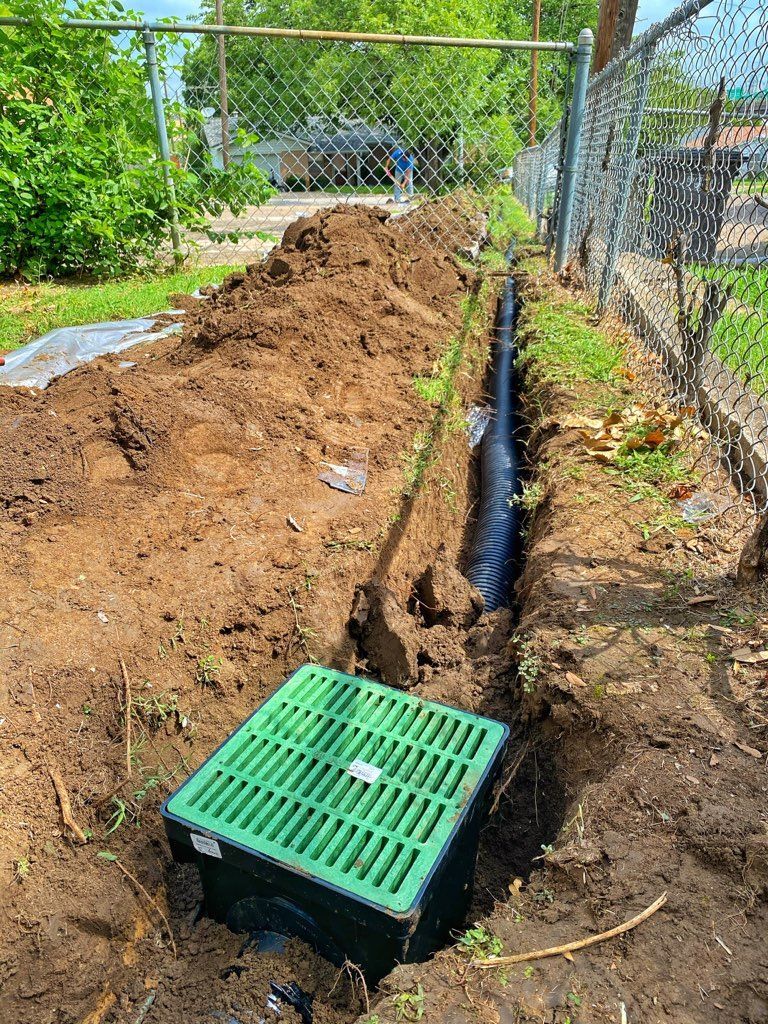
A french drain is a gravel-filled trench with a perforated pipe at the bottom, wrapped in filter fabric, that collects water moving through the soil and carries it downhill to a safe discharge point. Water follows the path of least resistance, and a properly built french drain is exactly that path: easier to enter than your clay, sloped away from your foundation, and protected from silting shut. Around Waco, it’s the workhorse fix for soggy soil along a slab edge and for groundwater that keeps a crawl space wet.
When do you need a french drain?
You need a french drain when the problem water is in the soil rather than on it. Surface puddles call for grading or a catch basin; ground that stays saturated, seeps, or feeds moisture toward the foundation calls for an interceptor below grade.
The signs that point underground:
- Soil beside the slab that stays wet days after rain
- A hillside lot where uphill water migrates toward the house
- A crawl space that’s damp even when the yard looks dry
- Beds and lawns that drown roots in the same low band every year
If your water sits on top of the grass instead, start at yard drainage. Not sure which you have? That’s what the free analysis at the drainage hub settles.
Which french drain setup fits your property?
Same anatomy, three placements. Where the pipe runs is decided by where your water starts and where it can legally, safely end up.
Perimeter French Drain
Runs along the foundation side that takes the water, intercepting soil moisture before it reaches the slab edge. The direct defense for the house itself.
Protects the foundation line
Interceptor Drain
Cut across a slope above the house, it catches migrating groundwater at the property’s high side and reroutes it around everything you care about.
Best for hillside lots
Drain-to-Sump Combination
When the lot is too flat for gravity to finish the job, the french drain feeds a sump basin and the pump provides the exit.
For flat or low-lying properties
| Setup | Cost tier | Best for | Discharge |
|---|---|---|---|
| Perimeter drain | $$ | Wet soil at the slab edge | Gravity to daylight |
| Interceptor drain | $$ | Uphill water on sloped lots | Gravity around the house |
| Drain-to-sump | $$$ | Flat lots with no gravity exit | Pumped discharge |
What does a french drain cost in Waco?
French drains are priced by the run: how many feet of trench, how deep it must go to catch your water, and where the discharge can exit. A short gravity run to daylight and a deep drain-to-sump system are different projects wearing the same name.
What the estimate weighs:
- Length and depth of the run. Set by where the water starts, not by a standard package.
- The exit. Gravity discharge costs less than adding a pump.
- Obstacles. Roots, utilities, fences, and hardscape along the route.
- Materials done right. Washed gravel and real filter fabric cost slightly more than the shortcut, and last decades longer.
The route plan and price come free and in writing. If a cheaper surface fix will solve it, the plan says so before you spend trench money.
Why do so many french drains fail?
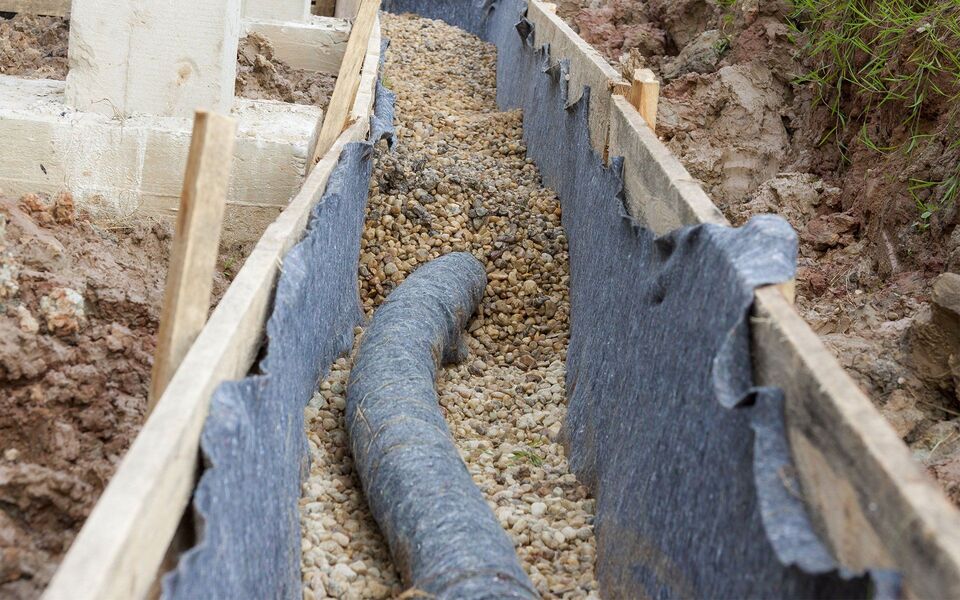
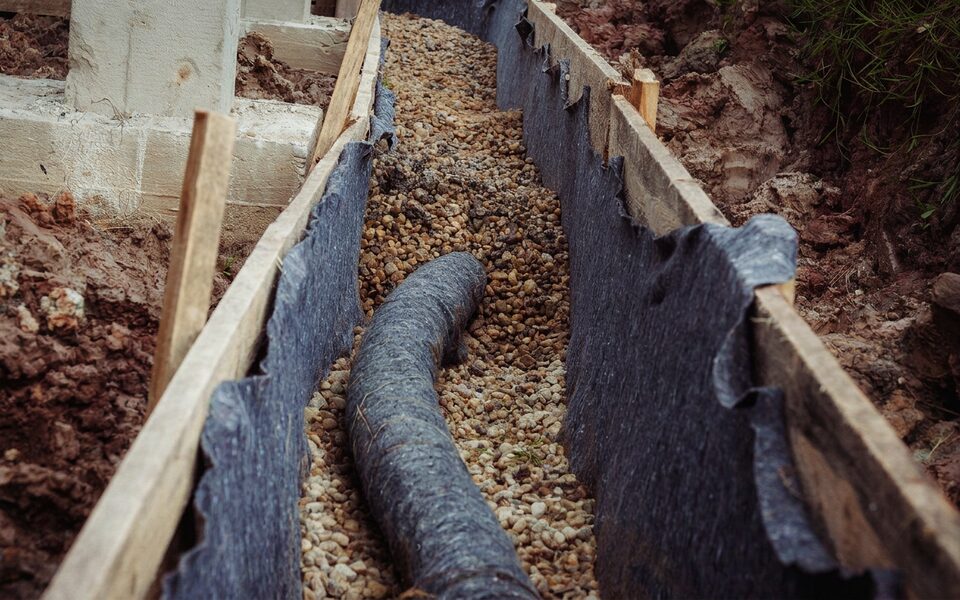
Because most of them are just buried pipe. Skip the filter fabric and the trench silts solid in a few seasons. Skimp on slope and the water sits in the pipe instead of leaving. Aim the discharge nowhere and you’ve moved the swamp, not solved it.
Ours are built like we’ll be judged by them, because around a town this size, we will be: washed gravel, fabric-wrapped pipe, consistent fall checked with a level, and a discharge that actually goes somewhere. Then we run water through it while you watch.
And because the point is protecting the foundation, the route design starts at your slab and works outward, reviewable by our in-house professional engineer on request.
French drain, surface drain, or regrading: which moves your water?
Three fixes that get confused constantly, sorted by where the water actually is.
| French drain | Surface drain / catch basin | Regrading | |
|---|---|---|---|
| The water | In the soil | Pooling on the surface | Flowing the wrong direction |
| The mechanism | Perforated pipe below grade | Grate and solid pipe | Reshaped slopes |
| Disruption | A trench, restored after | Small excavations | Surface work across the area |
| Relative cost | $$ | $ | $–$$ |
| Details at | This page | Yard drainage | Yard drainage |
Plenty of properties need a small combination, and one crew building both beats two contractors blaming each other’s pipe.
How is a french drain installed?
Four steps from wet soil to tested flow, with the lawn put back behind us.
Trace the groundwater
We find where the water enters, which way it moves, and the lowest safe place it can exit, because the discharge point designs the drain, not the other way around.
Cut & grade the trench
The trench is dug on a consistent fall toward the exit and checked with a level. Utilities are located before any digging starts.
Bed, wrap & backfill
Filter fabric lines the trench, perforated pipe lies in washed gravel, and the fabric wraps the whole assembly so silt stays out for the long haul.
Flow-test & restore
We run water through the system and watch it exit where it should. Then sod and beds go back, and you keep the route map for future reference.
What the free estimate includes: a groundwater trace, the discharge plan, trench route staked on the ground, and a written price. If the water problem turns out to be surface-level, we’ll route you to the cheaper fix.

Why a foundation company builds drains
Ronnie Wiethorn added drainage to The Foundation Doctor for a blunt reason: too many of his foundation repairs traced back to water nobody had managed. Building the drain himself closed the loop between cause and cure.
- Routes designed backward from the foundation they protect
- Fabric, washed gravel, and checked fall on every build, no shortcuts
- Two decades of watching what unmanaged water does to Central Texas slabs
- Locally owned in Waco, flow-testing drains for neighbors, not accounts
What property owners say after the water moved
Where we install french drains
Across the clay belt: Waco, Temple, Killeen, Bryan, College Station, McGregor, and surrounding Central Texas. Bryan & College Station line: (254) 863-8800.
French drain questions
How much does a french drain cost in Waco?
Price follows length, depth, and discharge distance. A short run protecting one wet wall costs far less than a full-perimeter system. Every quote starts with a free on-site assessment and comes as a written price.
How long does a properly built french drain last?
Decades. The failures you hear about come from skipped fabric, dirty gravel, or no fall, which is why our standard is non-negotiable: wrapped pipe, washed gravel, real slope, and a discharge point that actually takes the water away.
French drain or sump pump: which do I need?
A french drain moves water sideways with gravity; a sump pump lifts it out of a low spot that gravity cannot drain. If your problem area sits above a workable discharge point, a french drain usually wins. If water collects with nowhere to send it, you need the pump. The assessment settles it.
Will the trench wreck my yard?
We cut clean, keep the spoil contained, and restore the surface as we backfill. Grass over the run typically recovers within a season.
What is the difference between a french drain and a trench drain?
A french drain is perforated pipe buried in gravel that collects water moving through the soil. A trench drain is a surface channel with a grate that catches water flowing over pavement. Underground water, french; surface water, trench. Many properties pair them.
Where does the water from a french drain go?
To a discharge point picked before the trench is dug: daylight on a downhill slope, a legal street or curb exit, or a sump basin when the lot is too flat for gravity. The exit designs the drain, which is why our estimate starts there.
Do french drains require maintenance?
A properly built one, with filter fabric and washed gravel, needs almost none. Check that the discharge stays clear and keep heavy sediment sources like bare soil slopes planted. The failures you hear about come from fabric-free shortcuts that silt shut.
How deep does a french drain need to be?
Deep enough to intercept your water, which depends on where it moves through your soil. A drain protecting a foundation typically runs deeper than one drying a lawn, and the route plan sets depth from the site rather than from a standard number.